
How to avoid “dry-looking” food and uneven color across the full service case
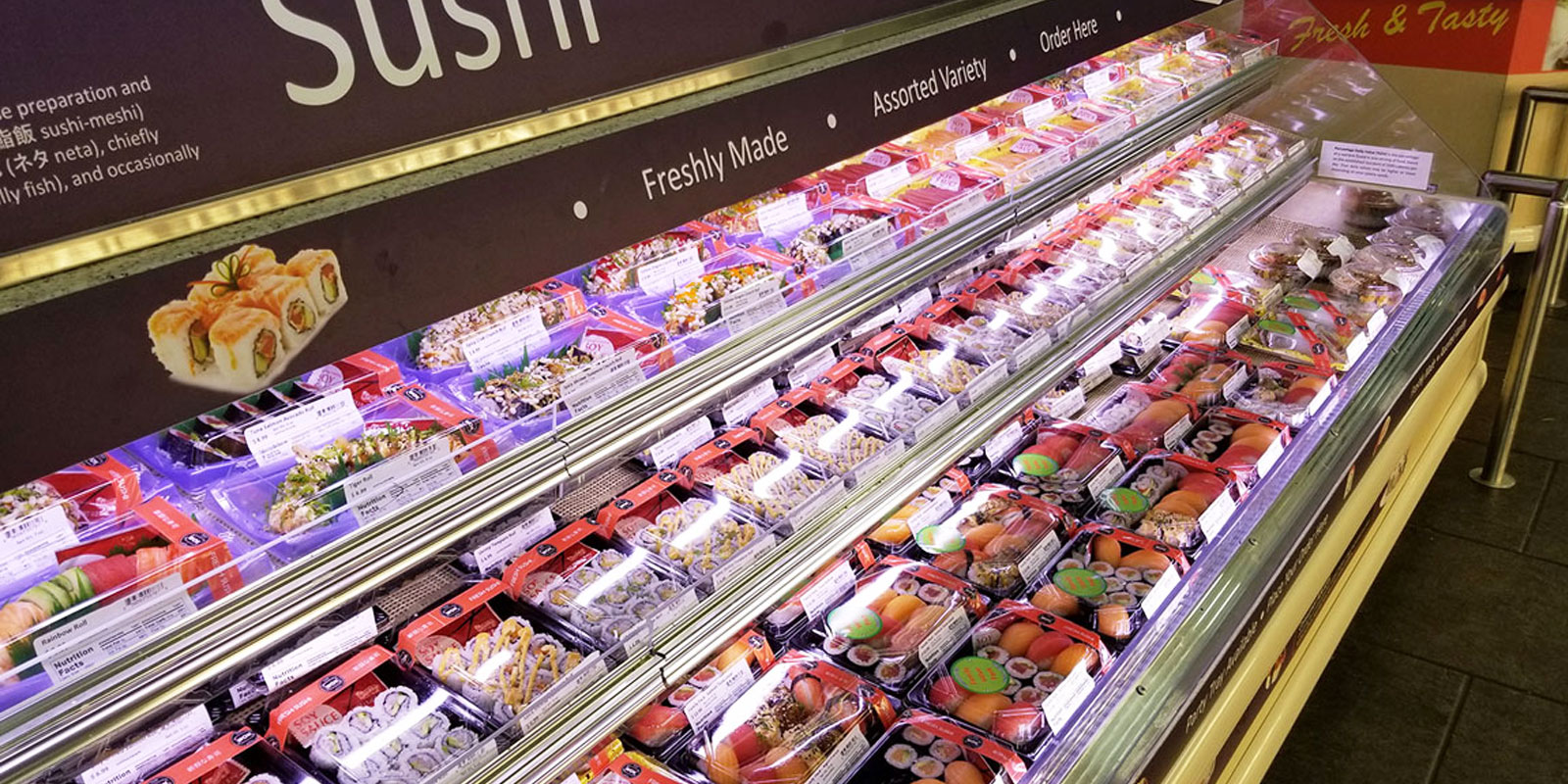
Deli counters and prepared foods sections are high-traffic areas in grocery stores, where customers make quick purchasing decisions based on visual appeal. Salads, sandwiches, sushi, and ready-to-eat meals are particularly sensitive to light exposure, which can cause dehydration, color fading, and a “dry” appearance. While refrigeration is essential, lighting plays an equally critical role in preserving freshness perception, maintaining product appeal, and minimizing waste.
This guide outlines practical strategies for selecting and positioning lighting that keeps deli and prepared foods looking fresh throughout the day.
Why Lighting Matters for Deli and Prepared Foods
Unlike packaged grocery items, deli foods are displayed in open cases or under transparent covers, making them directly exposed to light. Harmful wavelengths can:
- Accelerate moisture loss, causing lettuce, pasta salads, and spreads to appear dry.
- Change color perception, making meats look dull, cheeses pale, or sauces uneven.
- Reduce flavor perception, since visual cues strongly influence taste expectations.
Even minor visual degradation can affect purchasing behavior, leading to higher waste and lower customer satisfaction.
Color Accuracy and the Role of CPI
When choosing lighting, the Color Performance Index (CPI) is a key metric. High CPI lights reproduce colors faithfully, ensuring that:
- Leafy greens retain a vibrant, fresh hue.
- Deli meats display natural red tones without gray edges.
- Sandwich ingredients, cheeses, and sauces look appealing and fresh.
- Incorrect lighting may exaggerate or flatten colors, misleading shoppers and increasing the likelihood of returns or product rejection. High-CPI lighting is essential for deli and prepared food displays where first impressions are critical.
Placement Strategies for Even Illumination
Lighting placement significantly affects how customers perceive product freshness:
- Top-mounted lights: Illuminate all items but should be positioned to avoid hotspots and shadows that make some foods look overexposed or dry.
- Shelf lighting: Helps highlight individual trays and tiers, ensuring uniform exposure across all products.
- Corner or angled lights: Reduce shadows on multi-tier cases but must be angled to avoid direct glare on sensitive foods.
Retailers should test lighting from different customer perspectives to confirm consistent product appearance across the entire display.
Temperature and Moisture Considerations
Lighting interacts with case temperature. Even LED fixtures emit minor heat, which, when combined with poor airflow, can accelerate moisture loss in deli foods. Best practices include:
- Using low-heat, food-safe lighting designed specifically for refrigerated or ambient deli cases.
- Ensuring even airflow across trays to maintain consistent temperature and humidity.
- Monitoring case temperatures at tray level to detect microclimate variations that could impact freshness.
By combining proper lighting with airflow management, retailers can reduce surface drying and maintain visually appealing textures for extended display periods.
Practical Steps to Reduce Dry-Looking Foods
- Select balanced-spectrum, high-CPI lighting: Protects color and reduces light-induced dehydration.
- Position lights strategically: Avoid direct beams on moisture-sensitive items such as leafy salads or sauces.
- Use diffusers when necessary: Softens intensity and distributes light evenly across trays.
- Rotate stock regularly: Ensures older items are sold first and reduces overexposure time.
- Minimize case door openings: Limit unnecessary exposure to ambient light and temperature fluctuations.
These operational steps complement proper lighting choices to preserve freshness and reduce waste.
Staff Training for Deli Display Management
Employees play a critical role in maintaining the quality of deli and prepared foods:
- Train staff to recognize early signs of drying, discoloration, or dullness caused by improper lighting.
- Implement standard operating procedures for stock rotation and case door management.
- Encourage reporting of lighting issues, such as bulbs that are too bright or misaligned, to maintain consistent visual quality.
- Well-informed staff ensure that all items remain appealing throughout service hours, enhancing customer satisfaction and reducing shrink.
Economic and Operational Benefits
Proper lighting and case management provide tangible advantages:
- Reduced waste: Less drying and color loss means fewer discarded items.
- Labor efficiency: Minimizes time spent removing degraded products and allows staff to focus on service and merchandising.
- Energy savings: Low-heat lighting reduces refrigeration strain, lowering electricity costs.
- Customer confidence: Fresh-looking food builds trust, encourages repeat purchases, and enhances store reputation.
- Even minor improvements in lighting and handling can result in measurable operational savings across multiple store locations.
Department-Specific Insights
Deli and prepared foods contain a variety of ingredients that respond differently to light exposure:
- Leafy greens and vegetables: Susceptible to moisture loss; soft lighting and even airflow are critical.
- Sliced meats: Color fading occurs quickly under unbalanced lights; high CPI helps maintain natural red tones.
- Cheese and spreads: Surface drying can make texture appear stale; avoid direct high-intensity lighting.
- Ready-to-eat meals: Include multiple components; even lighting across trays is essential to maintain consistent visual appeal.
Understanding these nuances allows retailers to tailor lighting and operational practices for maximum impact.
Conclusion
Deli and prepared foods are highly sensitive to lighting, with poor illumination accelerating drying, color fading, and spoilage. By selecting high-CPI, low-heat lighting and implementing strategic placement, airflow management, and proper staff handling, retailers can maintain fresh-looking salads, sandwiches, and ready meals throughout service hours.
Investing in optimized lighting for deli and prepared foods improves customer satisfaction, reduces waste, and enhances operational efficiency. For grocery stores seeking practical guidance and tailored food-safe lighting solutions, visit www.merchandising-food-stores.com to explore options designed specifically for deli and prepared food displays