
Introduction
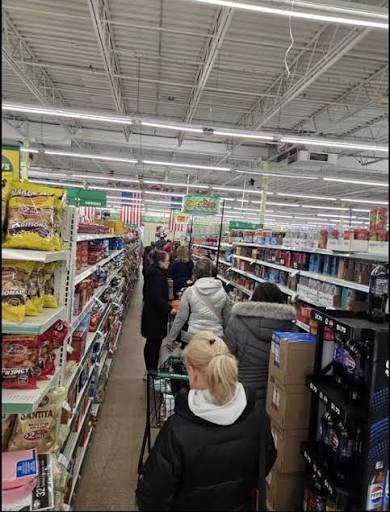
Grocery retail environments are designed to influence quick purchase decisions, especially in fresh food sections where appearance strongly impacts buying behavior. However, when displays become overly crowded with products, colors, signage, and promotional materials, they create what is known as visual overload. Instead of attracting customers, this condition reduces clarity and weakens decision-making.
In many stores, excessive product density undermines food merchandising strategies and disrupts the natural flow of shopping behavior. Even well-stocked sections fail to perform when shoppers feel mentally overwhelmed. This is a growing challenge in modern grocery store merchandising, where competition for attention is higher than ever.
1. Understanding Visual Overload in Retail Environments
Visual overload occurs when the amount of visual information exceeds the customer’s ability to process it efficiently. In grocery stores, this includes too many products, overlapping signage, inconsistent shelving patterns, and excessive promotional displays.
When this happens, shoppers experience:
- Difficulty focusing on specific products
- Reduced attention span in aisles
- Slower decision-making
- Avoidance of visually complex areas
This directly impacts retail food display optimization, because the purpose of display design is to simplify not complicate customer choices.
2. The Psychology Behind Decision Fatigue
Human brains are not designed to process unlimited choices quickly. When customers are exposed to too many options at once, they experience decision fatigue.
This leads to:
- Mental overload and hesitation
- Preference for familiar products only
- Reduced willingness to explore new items
- Abandonment of purchase decisions
As a result, even strategically placed products fail to support improve customer buying decisions retail, especially in high-traffic zones where quick decisions are expected.
3. Why More Products Do Not Always Increase Sales
Retailers often assume that increasing product variety will increase sales. However, beyond a certain point, more options reduce clarity instead of improving performance.
Excessive product variety causes:
- Confusion about quality differences
- Difficulty comparing similar items
- Reduced confidence in selection
- Lower engagement with premium products
This weakens supermarket merchandising techniques, which rely on structured presentation rather than excessive assortment.
4. Breakdown of Visual Hierarchy in Displays
A strong display has a clear visual hierarchy that guides the shopper’s eye. Visual overload destroys this structure.
Common problems include:
- No clear focal point
- Random product placement
- Overuse of promotional tags
- Competing colors and packaging styles
Without hierarchy, customers cannot identify priority items, reducing the effectiveness of visual merchandising grocery store strategies.
5. Impact on Fresh Food Perception
Fresh food sections are especially sensitive to visual presentation. Customers often judge freshness based on appearance rather than actual quality standards.
When displays are cluttered:
- Products appear less fresh
- Quality perception declines
- Trust in the store decreases
- Impulse interest drops significantly
This directly impacts customer perception food freshness, even if products are properly stored and maintained.
6. How Visual Overload Disrupts Store Flow
Store layout plays a major role in guiding customer movement. When displays are visually overwhelming, customers tend to avoid extended engagement.
This results in:
- Disrupted shopping flow
- Missed product categories
- Reduced cross-selling opportunities
- Lower engagement with fresh sections
Poor structure weakens grocery store execution gaps management and reduces overall shopping efficiency.
7. Connection Between Overload and Impulse Buying
Impulse purchases rely on quick emotional responses triggered by clear visual cues. Visual overload disrupts this process.
Instead of encouraging spontaneous purchases, it causes:
- Reduced impulse buying food retail behavior
- Shorter time spent near displays
- Lower interaction with promotional items
- Missed upselling opportunities
This has a direct negative impact on increase grocery store sales, particularly in high-margin categories like snacks, bakery, and ready-to-eat foods.
8. Poor Execution of Merchandising Standards
Visual overload is often a result of poor execution rather than intentional design.
Common issues include:
- Lack of shelf zoning and structure
- Overcrowded promotional placement
- Inconsistent product grouping
- Weak category separation
These problems reduce compliance with retail merchandising standards and make displays less effective in guiding customer behavior.
9. Layout and Structure as a Solution
The solution to visual overload is not fewer products, but better organization.
Effective optimize grocery store layout strategies include:
- Clear category zoning
- Defined focal points for key products
- Reduced unnecessary signage clutter
- Logical product grouping
These improvements help streamline decision-making and improve store navigation.
A structured layout also supports retail conversion optimization grocery, ensuring that attention translates into actual purchases.
10. Importance of Simplified Merchandising Systems
Modern retail environments require simplicity to compete effectively. Customers prefer fast, clear, and visually organized spaces.
Strong food display best practices include:
- Limiting unnecessary visual elements
- Highlighting key products instead of all products equally
- Using consistent shelving patterns
- Maintaining clean category separation
These practices strengthen retail merchandising solutions and improve overall store performance.
11. Strategic Impact on Sales Performance
Reducing visual overload has a direct impact on financial outcomes. When displays are simplified and structured, customers make decisions faster and more confidently.
This leads to:
- Higher improve fresh food sales
- Increased increase conversion rate retail store performance
- Better product visibility and engagement
- Improved merchandising impact on sales
Retailers that prioritize clarity over complexity consistently outperform those relying on cluttered displays.
Conclusion
Visual overload in grocery displays significantly reduces purchase decisions by overwhelming customers, weakening visual hierarchy, and increasing cognitive effort. Instead of driving engagement, excessive product density disrupts decision-making and reduces overall store performance.
By improving structure, simplifying presentation, and aligning with strong food merchandising strategies, retailers can enhance customer experience and increase conversion rates across all categories.
For More Information
For more insights on advanced merchandising systems and retail display optimization, visit www.merchandising-food-stores.com The platform provides professional solutions designed to improve store performance, enhance visual presentation, and increase retail conversion effectiveness.